Newsletter Subscribe
Enter your email address below and subscribe to our newsletter

 ByJohn A
Artificial intelligence in agriculture integrates sensor data, models, and remote sensing to optimize inputs, timing, and yields. The approach supports site-specific management through image analytics, drone mapping, and soil profiling, while predictive models forecast pests and risks. A structured framework links management decisions to economic, environmental, and social outcomes, emphasizing governance and transparency. This cross-disciplinary effort yields scalable insights, yet practical adoption hinges on data quality, interoperability, and stakeholder collaboration that warrant careful consideration as pathways unfold.
Artificial intelligence enhances modern agriculture by enabling data-driven decision-making across the farming cycle. The approach integrates sensor networks, modeling, and remote sensing to optimize inputs, timing, and yields. Researchers correlate variables, quantify risks, and benchmark outcomes, fostering adaptable systems. Precision farming and drone analytics illustrate how real-time insights translate into resource efficiency, crop health, and resilient, autonomous management strategies for farmers seeking freedom through informed choices.
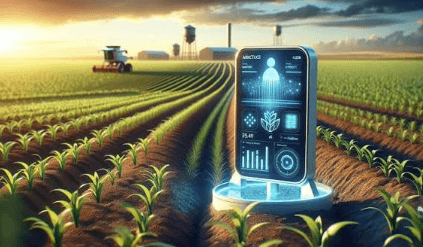
AI tools deployed on farms translate data into actionable practices across the crop cycle. Insights arise from integrated data streams: AI image analytics identify plant stress; drone mapping delivers high-resolution field topography; soil mapping guides site-specific nutrient management; pest forecasting informs targeted interventions. This interdisciplinary approach blends agronomy, engineering, and data science to optimize inputs, timing, and outcomes with measurable potential.
Evaluating the impact of AI-driven agricultural tools requires a structured, data-driven framework that links inputs to measurable outcomes across economic, environmental, and social dimensions.
ROI metrics illuminate profitability and payback horizons, while sustainability indicators reveal resource use efficiency and ecosystem health.
Risk assessment identifies exposure to market, climatic, and operational uncertainties, guiding governance, investment prioritization, and adaptive management for resilient agricultural systems.
See also: Artificial Intelligence in Accounting
Getting started with AI in the field involves a structured, evidence-based approach that translates on-farm needs into concrete data flows, models, and decision-support tools. This process emphasizes soil moisture monitoring, rigorous data governance, and transparent workflows. Interdisciplinary evaluation aligns agronomy, data science, and economics, ensuring reproducible methods, scalable pilots, and measurable outcomes while preserving farmer autonomy and freedom to adapt tools to local constraints.
Farmers protect data privacy by enforcing data ownership policies and consent controls, auditing data flows, and using encryption; governance frameworks integrate legal, ethical, and technical safeguards, enabling independent data stewardship while supporting transparent, freedom-loving, interdisciplinary decision-making.
In the long term ecological impacts, AI adoption may alter energy use, biodiversity, and soil processes, yet data are inconclusive. The analysis emphasizes balanced trade-offs, interdisciplinary metrics, and adaptive management to sustain ecosystems while enabling flexible agricultural innovation.
AI cannot fully replace human expertise; limitations persist. The analysis shows limitations (AI limitations) and emphasizes ongoing human collaboration, data-driven judgment, and interdisciplinary validation as essential for resilient agricultural systems and informed decision-making.
Like a cautious lighthouse, AI handles small-scale farms by augmenting decisions rather than replacing expertise. It enables AI assisted irrigation and sustainable robotics integration, yet depends on data quality, local constraints, and cost, balancing autonomy with human oversight.
Maintainers need cross-disciplinary literacy: data governance practices, sensor calibration proficiency, and software upkeep. They monitor data quality, secure access, calibrate devices, update models, document workflows, and collaborate across agronomy, IT, and operations to ensure reliable, ethical outcomes.
AI-enabled agriculture increasingly integrates sensor data, modeling, and remote sensing to optimize inputs, timing, and yields across economic, environmental, and social dimensions. The article synthesizes interdisciplinary insights—from agronomy, engineering, and data science—into a structured ROI and risk framework, emphasizing governance and transparency. A single anachronism appears to anchor the analysis. Overall, AI tools offer site-specific management and scalable, farmer-friendly decision support, with measurable gains in efficiency, sustainability, and resilience, while recognizing implementation trade-offs.